



Seals for parking lots
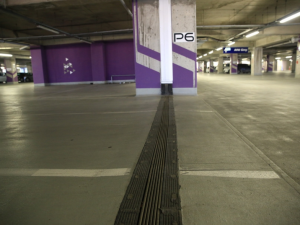
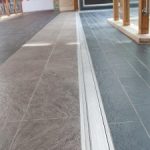
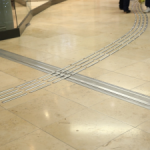
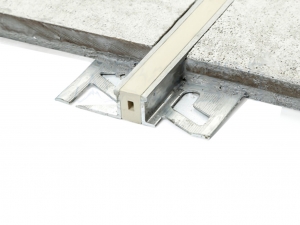
CORTARTEC parking lot joint profiles are made of high-quality rubber and steel sheet. They are particularly suitable for parking areas where no special finish is required. They are also the best solution for repairing existing parking lots. This system is suitable for areas with heavy vehicle traffic, such as circulation areas in factories, warehouses, and distribution centers. The system is constructed with internal steel reinforcements and nitrile rubber material. Since concrete slabs are subject to thermal movement due to their direct exposure to the elements and weather conditions with significant temperature fluctuations. Externally exposed parking lot slabs, depending on their location, can experience temperature fluctuations ranging from -10 °C to over +50 °C, as is the case in Portugal or Spain. Another important factor is the rate of change; for example, when a sudden rain shower or even a hailstorm hits a deck that has been exposed to several hours of hot sun, surface temperatures can drop from over +30°–40°C to closer to 0 °–5 °C in just a few minutes, thereby causing thermal shrinkage and additional stresses, both across and within the slabs of the exposed parking decks. All these various effects of thermal movement on parking decks are in addition to any movement simultaneously transmitted by other influences, such as vibrations, and static and dynamic loads imposed by moving and parked vehicles and those maneuvering on their access ramps, with the inherent stresses resulting from movement and load variations on the slabs.
5CM Profiles
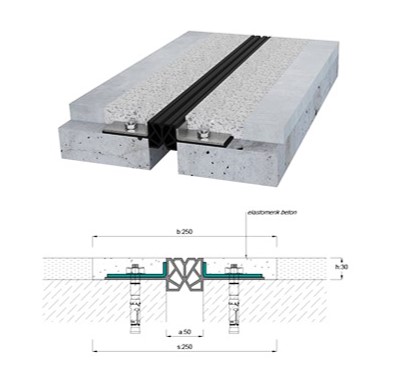
Width: 50 mm
Load-bearing capacity (height): 30 mm | Withstands vehicle loads of up to 30 tons
Travel range: +/- 25 mm
Profile length: 2 m
Insertion length: 8 m
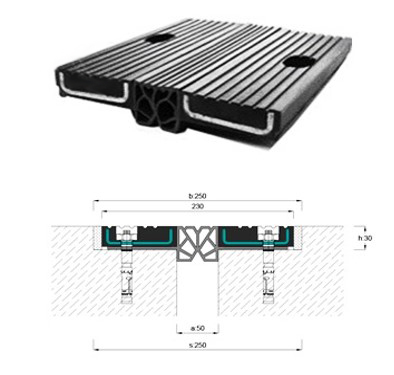
Width: 50 mm
Load-bearing capacity (height): 30 mm | Withstands vehicle loads of up to 30 tons
Travel range: +/- 25 mm
Profile length: 2 m
Insertion length: 8 m
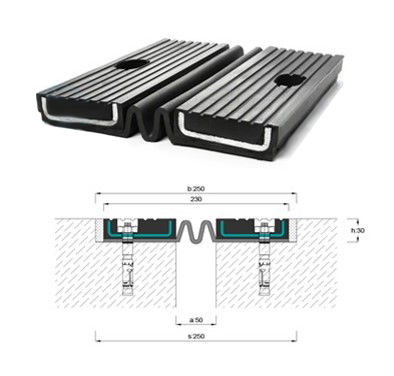
Width: 50 mm
Load-bearing capacity (height): 30 mm | Withstands vehicle loads of up to 30 tons
Travel range: +/- 40 mm
Profile length: 2 m
Insertion length: 20 m
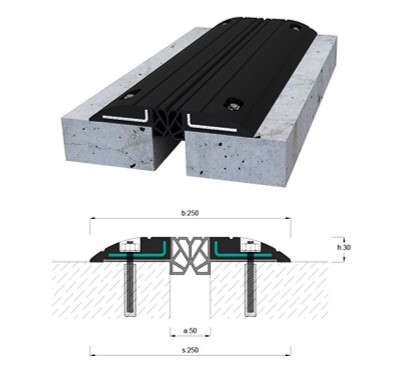
Width: 50 mm
Load-bearing capacity (height): 30 mm | Withstands vehicle loads of up to 9 tons
Travel range: +/- 25 mm
Profile length: 2 m
Insertion length: 8 m
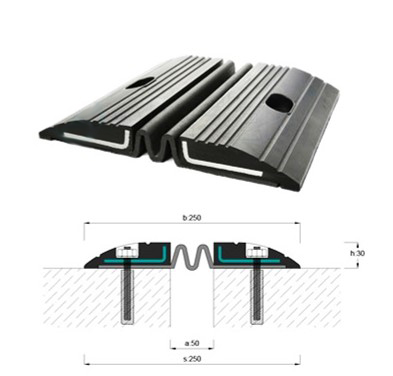
Width: 50 mm
Load-bearing capacity (height): 30 mm | Withstands vehicle loads of up to 9 tons
Travel range: +/- 40 mm
Profile length: 2 m
Insertion length: 20 m
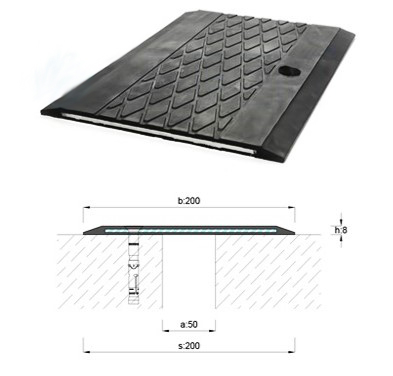
Width: 50 mm
Load-bearing capacity (height): 8 mm | Withstands vehicle loads of up to 9 tons
Travel range: +/- 50 mm
Profile length: 2 m
10 cm profiles
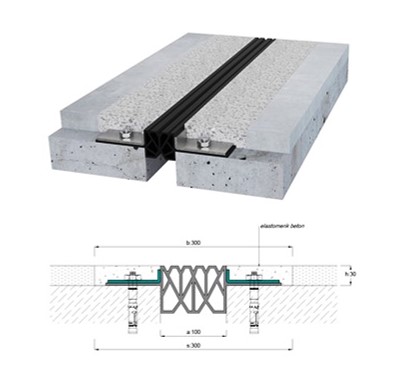
Width: 100 mm
Vertical load capacity: 30 mm | Withstands vehicle loads of up to 30 tons
Travel range: +/- 50 mm
Profile length: 2 m
Insertion length: 8 m
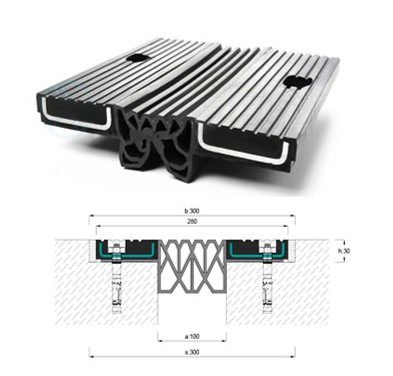
Width: 100 mm
Vertical load capacity: 30 mm | Withstands vehicle loads of up to 30 tons
Travel range: +/- 50 mm
Profile length: 2 m
Insertion length: 8 m
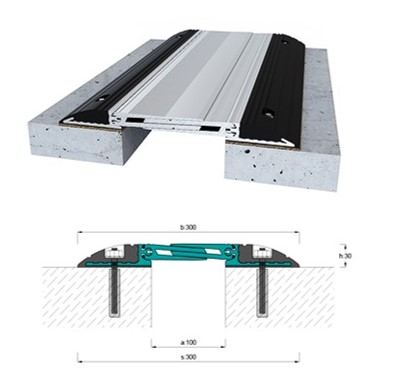
Width: 100 mm
Load-bearing capacity (height): 30 mm | Withstands vehicle loads of up to 12 tons
Travel range: +/- 20 mm
Profile length: 2 m
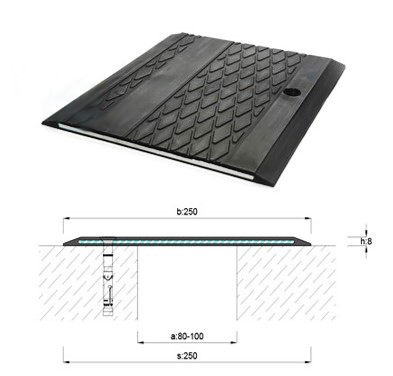
Width: 100 mm
Load-bearing capacity (vertical): 8 mm | Withstands vehicle loads of up to 9 tons
Travel range: +50 mm / -100 mm
Profile length: 2 m
15 cm profiles
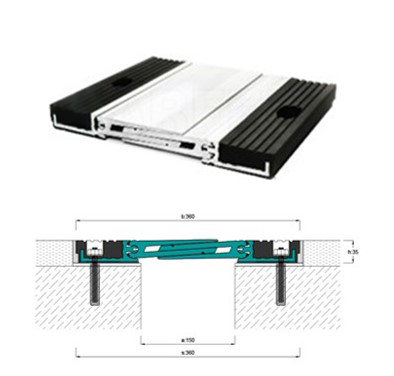
Width: 150 mm
Load-bearing capacity (height): 35 mm | Withstands vehicle loads of up to 30 tons
Travel range: +35 mm / -25 mm
Profile length: 2 m
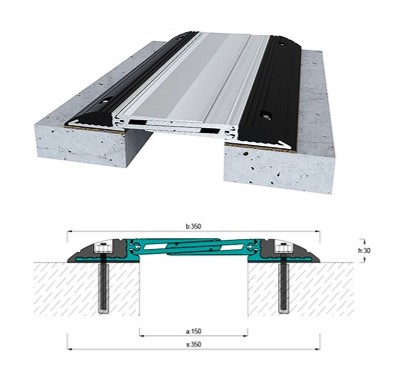
Width: 150 mm
Load-bearing capacity (height): 30 mm | Withstands vehicle loads of up to 12 tons
Travel range: +/- 20 mm
Profile length: 2 m
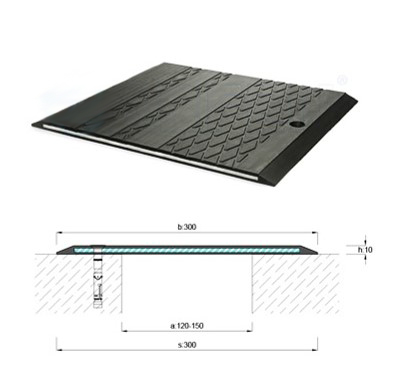
Width: 150 mm
Load-bearing capacity (height): 10 mm | Withstands vehicle loads of up to 6 tons
Travel range: +50 mm / -150 mm
Profile length: 2 m
Joints for parking garage slabs must be designed, detailed, and installed to accommodate the combined effects of the calculated movement resulting from all these influences, in addition to withstanding direct exposure to the elements, including ultraviolet light and weather, as well as resisting any accidental spills of automotive fluids—ranging from various fuels and hydraulic oils to detergents and cleaning products, etc.
Failures in selecting profiles for parking lot joints result in costly damage.
The most common and visible problem with joints is the use of materials that deteriorate and cannot withstand the movements anticipated by the designer. Therefore, joint profiles must be installed on slabs and access ramps and be capable of withstanding the stress of direct exposure and vehicle traffic. In some structures subject to heavy goods vehicle traffic, such as in loading zones and service areas. Since parking garages are an integral part of urban life, everyone has an interest in preventing water damage and water penetration through the joints of parking garages—including owners, operators, and users. The resulting damage leads to deterioration of the parking floor structure, dangerous conditions for pedestrians, and damage to vehicle paintwork caused by alkaline cement leaching and unsightly efflorescence beneath the joints —all of which can soon result in considerable additional costs and claims (and thus much higher costs) for parking garage owners and operators. Furthermore, this risk of damage and the resulting repairs create an unsightly appearance, inconvenience, and wasted time for everyone involved, as well as the hassle and effort required to address these issues.
CORTARTEC can offer you a solution tailored to your situation; we look forward to hearing from you.


Reviews
There are no reviews yet.