




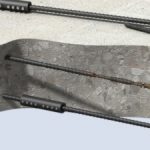
Stainless steel armor
Reinforcing bars – Coiled reinforcing bars – Molded reinforcing bars – Electro-welded mesh
Steel is the backbone of many structures. Therefore, quality and durability are essential. We also know where and when it is worth choosing specific steel grades.
Bar stock – Coiled bar stock – Molded bar stock – Electro-welded mesh
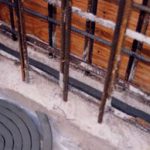
Steel is the backbone of many structures. Therefore, quality and durability are essential. We also know where and when it is worth choosing specific steel grades. In short: We offer our experience and expertise to help you choose the right stainless steel for your project and save our customers money! Stainless steel reinforcement does not rust. When used in reinforced concrete structures, it is the optimal way to prevent corrosion-related damage to the concrete and, consequently, the high cost of maintenance and associated risks. Our engineers know exactly where it is worth using it. Through the intelligent use of stainless steel, we ensure a highly positive result without impacting the final project cost.
To ensure consistently high quality, our production and quality assurance are continuously monitored by various international supervisory bodies, such as UK Cares, MPA Germany, Kontrollrådet in Norway, and Teknologi Vigor in Denmark. Continuous internal checks are also performed in our own laboratory. All data and results are recorded in our database.
Certificates indicating the chemical composition and mechanical properties accompany all deliveries of stainless steel reinforcing bars.
Our products can be identified at any time, even after being embedded in concrete, thanks to unique markings applied to the rebar during production.
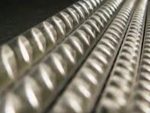
Stainless steel ribbed rebar is the smart, cost-effective, and corrosion-free choice for construction.
- Wastewater treatment plants
- Nuclear power plants
- Military facilities
- Laboratories with sensitive measuring equipment
- Specially designed/outdoor structures
- Refineries
- Piers
- Dams
- Foundations
- Historic buildings
- Petrochemical plants
- Industrial complexes
- Bridges
- Tunnels
- Parking garages
- Airports
- Offshore industry
- Port facilities
[mk_fancy_title color=”#fe6600″ size=”25″ font_weight=”bold” txt_transform=”uppercase” margin_bottom=”0″ font_family=”none”]Varões nervurados de aço inoxidáveis[/mk_fancy_title]
-
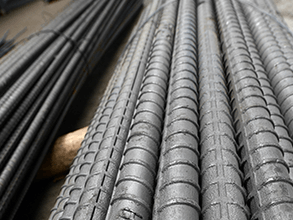
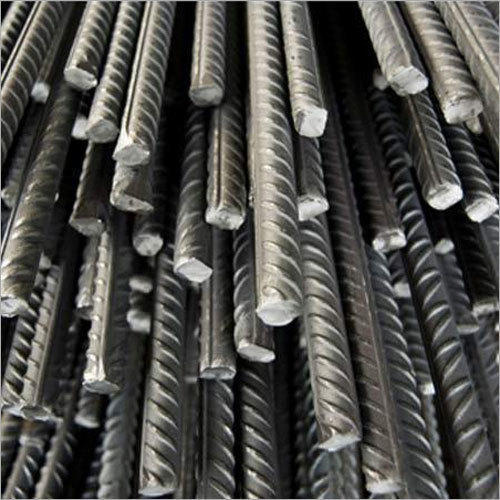
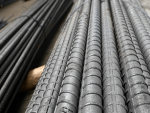
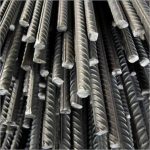
All types of reinforcement bars for reinforced concrete structures made of stainless steel, with diameters ranging from 3 to 50 mm.
-
Ribbed rods are supplied in lengths from 6,000 mm to 12,000 mm or cut to length according to the order.
-
Weight per bundle: up to approximately 2,500 kg.
Stirrups
-
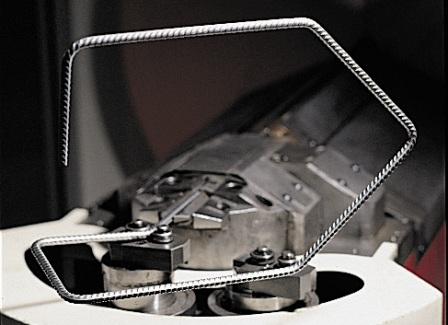
We can produce all types of stainless steel reinforcement stirrups. We cut and bend the stirrups according to the bending plan and material specifications provided by the customer and deliver the finished products directly to the construction site.
-
The stirrups are bent specifically according to the customer’s drawings and the molding plan.
-
To avoid the risk of misunderstandings, standard bending guidelines should be followed
-
We use the standard specifications of BS8666: 2005. Other specifications are available upon request.
-
Important: National product standards have different requirements regarding bending radii and the mechanical properties of stainless steel reinforcement. Therefore, it is essential that all orders be specified in accordance with a standard, and that this standard be indicated on the order.
Coils
-
Ribbed steel for stainless steel reinforcement in diameters from 3 to 16 mm, available in coils.
-
Weight per coil: approx. 2000 kg.
-
Outer diameters: approx. 1050 mm.
-
Internal diameters: approx. 640 mm.
-
Height: approx. 640 mm.
-
The coils are tied with 4 x 32 mm plastic strips.
Characteristics of stainless steel
-
-
By adding elements such as chromium, nickel, and molybdenum to the alloy, the corrosion resistance of the steel is significantly improved.
According to EN 10088-1, stainless steel has a minimum chromium content of 10.5% and a maximum carbon content of 1.2%.
Stainless steel alloys, used for reinforcing bars, often have a higher chromium content, as well as added nickel and, in some cases, molybdenum to further increase corrosion resistance.
A large number of steel alloys can be correctly defined as stainless steel due to their chromium content, but corrosion resistance varies greatly depending on the specific alloy composition.
In addition to the mechanical properties of stainless steel alloys being different, they depend mainly on the microstructures of the alloys.
-
Stainless steel is divided into four main groups, depending on the microstructures of the steel:
-
Martensitic and Ferritic:
Martensitic and ferritic stainless steels are not used for reinforcing bars due to their relatively low corrosion resistance and the risk of microcracks.
-
Austenitic:
Austenitic stainless steels combine good corrosion resistance with high strength. Therefore, they are very popular for a wide range of applications, including the reinforcement of concrete structures.
-
Duplex (Austenitic-Ferritic):
Duplex alloys combine the best qualities of austenitic and ferritic steels. This means that duplex alloys offer even better corrosion resistance than austenitic steel and, at the same time, have good weldability and formability. However, processing duplex steels is more demanding.
Stainless steel mesh
-
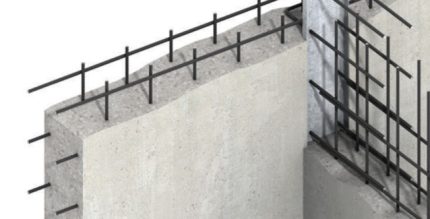
The mesh offers real advantages compared to using rods tied on-site.
-
Welded mesh does not need to be tied on site. The mesh saves time and labor costs and ensures precision. Machine-welded mesh reduces the risk of physical injury on site.
-
We supply the most common European sizes and keep stock in our factory for fast and efficient delivery.
-
We have a dedicated team ready to work with our customers to meet the specific requirements of their projects. This includes custom dimensions for mesh, panels, or rods.
| Alloy Eurocode | Diameter mm | Panel size mm | Mesh(mm) | Boss(mm) L/B | Nominal weight kg/item |
|---|---|---|---|---|---|
| 1.4571 | 3.00 | 5000×2150 | 50×50 | 25/25 | 24.10 |
| 1.4571 | 3.00 | 5000×2150 | 75×75 | 25/25 | 16.19 |
| 1.4571 | 4.00 | 5000×2150 | 50×50 | 25/25 | 45.00 |
| 1.4571 | 4.00 | 5000×2150 | 100×100 | 50/25 | 22.62 |
| 1.4571 | 4.00 | 5000×2150 | 150×150 | 25/25 | 14.96 |
| 1.4362 | 5.00 | 5000×2150 | 100×100 | 50/25 | 34.80 |
| 1.4362 | 5.00 | 5000×2150 | 150×150 | 25/25 | 23.70 |
| 1.4362 | 6.00 | 5000×2150 | 100×100 | 50/25 | 48.94 |
| 1.4362 | 6.00 | 5000×2150 | 150×150 | 25/25 | 33.32 |
| 1.4362 | 8.00 | 5000×2150 | 100×100 | 50/25 | 87.00 |
| 1.4362 | 8.00 | 5000×2150 | 150×150 | 25/25 | 59.24 |
[mk_fancy_title color=”#fe6600″ size=”25″ font_weight=”bold” txt_transform=”uppercase” margin_bottom=”0″ font_family=”none”]Ligas[/mk_fancy_title]
-
We can supply stainless steel reinforcement bars in the following alloys and dimensions.
-
If you require alloys or dimensions not listed in the table, please contact us for more information.
| Alloy in accordance with EN 10088-1 | General description | Production process | Dimensions (mm) | Arminox bar mark |
|---|---|---|---|---|
| 1.4301 | 304 | Hot-rolled wire | 3-16 20-50 | /// vv /// Variable |
| 1.4436 | 316 | Twisted wire | 3-16 | /// vvv /// |
| 1.4571 | 316ti | Worked Wire | 3-16 | /// x /// x /// x /// |
| 1.4362 | Duplex | Hot-rolled wire | 6-12 12-32 | /// x /// x /// x // Variable |
| 1.4462 | Duplex | Hot-rolled | 16-40 | Variable |
How to Choose the Alloy
-
The choice of alloy depends on the environment in which the structure will be used. Arminox recommends the following applications for our alloys:
Recommended alloy based on the environment class:
| Environment Class | Aggressiveness | Recommended Alloy |
|---|---|---|
| Passive | – | High-strength reinforcing steel |
| Moderate | – | High-performance reinforcing steel / 1.4301 |
| Aggressive | Low
Medium High |
1.4301
1.4436 / 1.4362 / 1.4571 1.4462 |
| Extra aggressive | – | Super austenitic / Super duplex |
Definition of a harsh environment:
| Environment | Example | Effect |
|---|---|---|
| Low | Inland industrial areas | Carbonation |
| Medium | Marine and coastal areas. Road de-icing salt | Chloride penetration |
| High | Extreme temperature differences. Extreme chloride concentrations. Extreme environmental conditions | Carbonation. Chloride penetration from other sources |
Related products
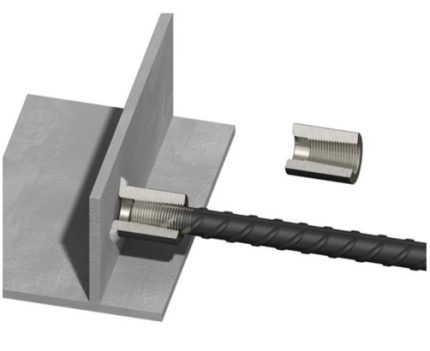
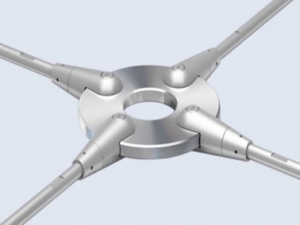
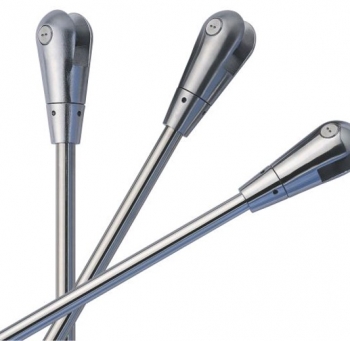
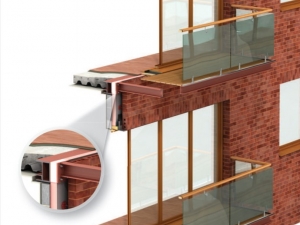
Armor storage boxes



Reviews
There are no reviews yet.